The artificial intelligence boom isn’t coming; it’s already here, reshaping how industries operate, innovate, and scale.
Behind every groundbreaking large language model (LLM), autonomous driving algorithm, and real-time predictive engine lies a massive, quiet hero: GPU-accelerated compute infrastructure.
Standard CPUs simply aren’t built to handle the millions of matrix multiplications happening simultaneously during deep learning operations.
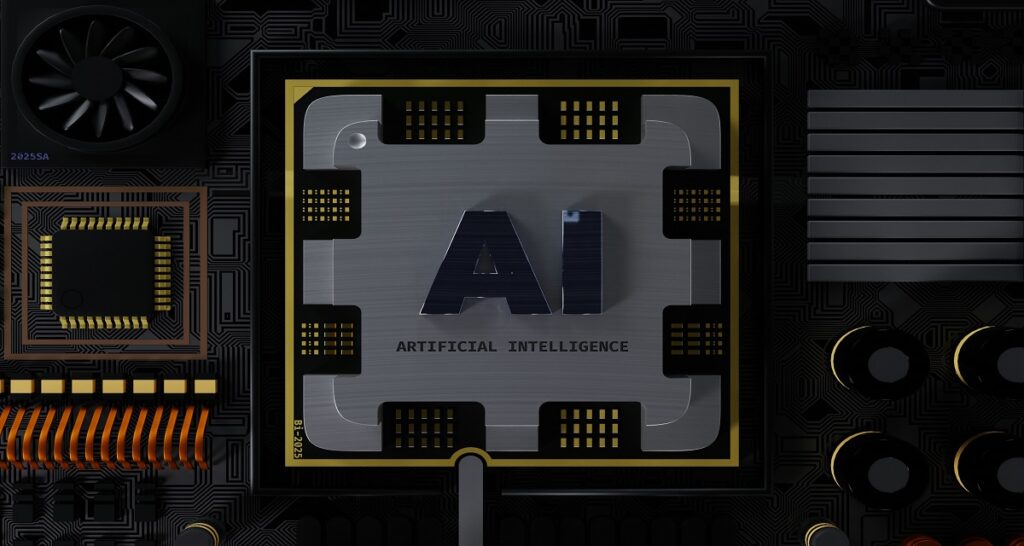
Enter GPU Server Solutions for AI the high-performance, high-density powerhouses designed specifically to crunch vector calculations at lightning speed.
Whether you are fine-tuning proprietary enterprise models or deploying real-time inference at scale, choosing and optimizing the right hardware architecture can mean the difference between market leadership and crippling latency.
The Shift from Standard Compute to Enterprise AI Infrastructure
For decades, traditional data centers relied almost exclusively on central processing units (CPUs).
While CPUs excel at sequential processing and general-purpose logic, modern AI algorithms demand massive parallel processing capabilities.
A single modern AI workload can involve billions or trillions of parameters.
Training a model of this magnitude on CPU clusters alone would take years and cost millions in energy bills.
Transitioning to Enterprise AI Infrastructure isn’t just an upgrade; it’s a complete paradigm shift in system design.
Enterprise-grade GPU servers integrate high-bandwidth memory (HBM), ultra-fast inter-GPU communications (such as NVIDIA NVLink), and PCI Express Gen 5 connectivity.
This architecture removes physical bottlenecks, allowing data to flow directly between memory and compute cores without choking the system processor.
The result? Exponential jumps in training efficiency, drastically reduced operational overhead, and a realistic path to enterprise innovation.
AI Infrastructure for Model Training: Heavy Lifting at Scale
Model training is the most compute-intensive phase of the artificial intelligence lifecycle.
It requires feeding petabytes of dataset variables into deep neural networks to adjust billions of weight values.
When building dedicated AI Infrastructure for Model Training, standard server designs won’t cut it. System architects must solve three critical hardware challenges:
1. Thermal and Power Density
Modern AI servers hosting multiple enterprise GPUs (like the NVIDIA H100, H200, or Blackwell series) draw immense amounts of power.
A single 8-GPU node can easily exceed 10 to 10.2 kW of power.
Efficient air cooling is rapidly reaching its physical limit, forcing organizations to transition toward liquid cooling systems, direct-to-chip cooling, and immersion techniques.
2. High-Speed Interconnects
A single GPU card cannot train a massive model alone. Hundreds or thousands of nodes must work as a unified unit.
If the network between GPUs is slow, high-end compute engines sit idle waiting for data packets.
Technologies like PCIe Gen 5, InfiniBand, and RoCE (RDMA over Converged Ethernet) are vital to maintain continuous throughput across nodes.
3. High-Throughput Storage Access
AI servers feed on data. Fast NVMe drives combined with high-speed parallel file systems ensure that storage access doesn’t create artificial performance ceilings during intense epoch runs.
AI Infrastructure for Model Inference: Speed, Precision, and Efficiency
While training gets most of the spotlight, AI Infrastructure for Model Inference represents where the actual business value is realized.
Inference is the phase where a pre-trained model takes real-world input like a chat query, an image, or a fraud prevention signal and returns a precise prediction in real time.
Inference workloads demand a completely different optimization strategy compared to training:
- Latency Over Pure Speed: Inference is often end-user facing.
A delay of a few hundred milliseconds can ruin user experience in live applications. - Cost per Request: Running full 80GB enterprise GPUs solely for basic inference requests is financially unviable.
Smart architectures leverage lower-power inference GPUs (e.g., NVIDIA L4, L40S) or slice high-end GPUs using MIG (Multi-Instance GPU) tech. - Throughput Optimization: Techniques like model quantization (converting FP32 or FP16 models to INT8/FP8) allow servers to run larger models in memory while significantly reducing power consumption.
Powering Next-Gen Operations with AI Cluster Solutions
When a single server node reaches its limit, the logical next step is interconnecting multiple nodes into dedicated AI Cluster Solutions.
An AI cluster combines compute, high-speed storage, non-blocking networking fabrics, and orchestration software into a singular supercomputing asset.
Deploying clusters allows organizations to scale out seamlessly rather than hitting hard hardware walls.
Key components of successful AI cluster deployments include:
- Orchestration Layers: Kubernetes integrated with specialized tools (like Kubeflow or Ray) distributes AI workloads automatically across available nodes.
- Unified Cluster Management: Real-time monitoring of thermal stats, GPU memory usage, power consumption, and job queues prevents system crashes during heavy workloads.
- Data Pipeline Optimization: Direct RDMA (Remote Direct Memory Access) allows GPUs across different cluster nodes to write directly to each other’s memory, bypassing OS kernels completely.

Engineering a Scalable GPU Infrastructure for the Future
Technology moves fast, but enterprise capital moves carefully.
The biggest mistake an organization can make is building an AI environment that meets today’s needs but breaks tomorrow.
Designing a Scalable GPU Infrastructure requires a forward-looking perspective focused on modular design.
Here are the essential principles for building future-proof AI hardware environments:
- Modular Node Expansion
Choose rack configurations and server architectures that allow you to plug in additional GPU blades, network switches, or storage banks without redesigning your entire server floor layout.
- Hybrid Cloud Capability
While on-premises GPU hardware offers better long-term TCO (Total Cost of Ownership) for predictable workloads, cloud-bursting capability ensures you can handle unexpected training spikes without overprovisioning physical hardware.
- Vendor-Agnostic Software Stacks
Hardware is only half the battle. Utilizing open-source frameworks (PyTorch, TensorFlow) and containerized software stacks ensures your workloads can shift seamlessly if new GPU architectures or specialized accelerators hit the market.
Driving Business Value with Purpose-Built AI Hardware
Investing in modern GPU Server Solutions for AI is no longer just a decision for the IT department it is a core strategic investment for executive leadership.
Whether you are building proprietary enterprise intelligence, serving millions of real-time API requests, or scaling massive cluster solutions, the underlying compute architecture dictates your speed to market and long-term operating costs.
By carefully matching hardware selection to specific workloads distinguishing between model training muscle and inference efficiency organizations can construct an agile, scalable enterprise foundation that yields high returns today while remaining ready for whatever tomorrow’s AI evolution brings.