
Description
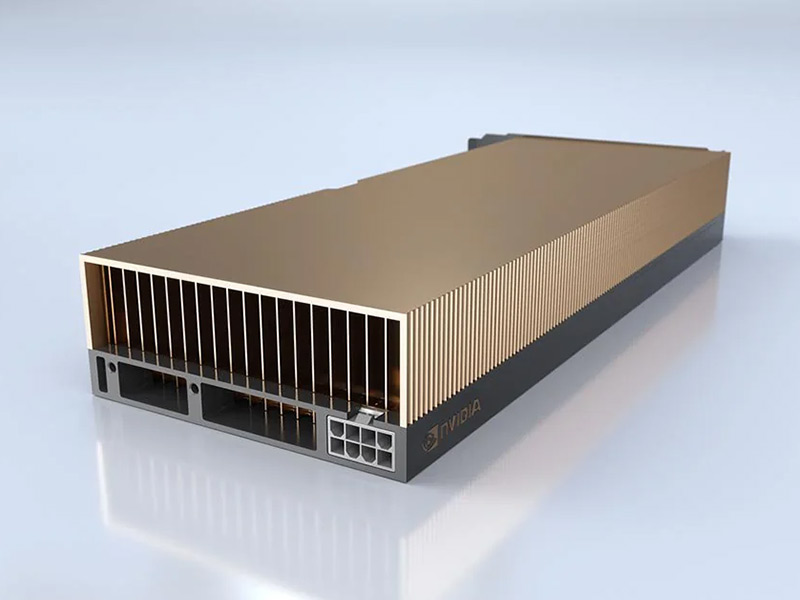
The NVIDIA H100 Tensor Core GPU, built on the Hopper architecture, represents a significant advancement in accelerated computing, offering unparalleled performance for AI, HPC, and data analytics workloads.
Architectural Overview NVIDIA H100
At the core of the NVIDIA H100 lies the revolutionary Hopper architecture—a purpose-built design for handling the immense computational demands of AI and high-performance computing (HPC) in the modern era. Hopper builds upon and vastly enhances the capabilities introduced by the previous Ampere architecture, with a renewed emphasis on AI model efficiency, transformer optimization, and energy-efficient throughput.
The H100 is manufactured using TSMC’s advanced 4N process node, which enables the integration of approximately 80 billion transistors within an 814 mm² die, resulting in remarkable silicon density. This allows for an unprecedented level of parallelism, precision, and raw computational power.
Streaming Multiprocessors (SMs)
The SXM5 variant of the H100 includes up to 132 SMs, while the PCIe variant houses 114 SMs. These SMs are the fundamental building blocks of the GPU and contain:
- 16,896 CUDA Cores (SXM5) or 14,592 CUDA Cores (PCIe) for parallel execution of general-purpose workloads.
- 528 (SXM5) or 456 (PCIe) Fourth-Generation Tensor Cores designed to accelerate matrix operations, which are central to deep learning training and inference.
Fourth-Generation Tensor Cores
The upgraded Tensor Cores provide performance boosts across multiple data types including FP64, FP32, TF32, BF16, FP16, FP8, and INT8. Each core is optimized for mixed-precision workloads, essential for training deep learning models faster while preserving accuracy.
Transformer Engine
A standout feature in the Hopper architecture is the Transformer Engine, specifically developed to accelerate the training and inference of transformer-based models—such as GPT, BERT, and other LLMs. This engine dynamically switches between FP8 and FP16 precision depending on layer sensitivity, which maximizes throughput without compromising model fidelity.
Enhanced L2 Cache & Memory Subsystem
The H100 is equipped with a generous 50 MB of L2 cache, significantly reducing latency and improving access speed to frequently used data. It supports 80 GB of HBM3 (SXM5) or HBM2e (PCIe) high-bandwidth memory, capable of reaching up to 3.35 TB/s bandwidth in the SXM5 configuration. This makes it ideally suited for memory-bound workloads such as large-scale simulations or LLMs.
Scalable Interconnects
To enable high-throughput multi-GPU configurations, Hopper architecture integrates advanced interconnects:
- NVLink (up to 900 GB/s for SXM5, 600 GB/s for PCIe) ensures fast GPU-to-GPU communication.
- PCIe Gen5 x16 interface supports the latest generation of server architectures and facilitates higher aggregate system bandwidth.
Second-Generation MIG (Multi-Instance GPU)
Building upon the first-generation MIG introduced in A100, the H100 allows a single GPU to be partitioned into up to 7 isolated GPU instances, each with dedicated SMs, memory, and cache resources. This is a game-changer for multi-tenant and cloud environments, where efficiency and security are paramount.
Confidential Computing with Secure Execution Environments
The Hopper architecture also introduces the industry’s first confidential computing capability in a GPU. Using dedicated hardware-level features, the H100 enables data to remain encrypted and secure even during computation. This is essential for industries like healthcare, finance, and defense where data sensitivity is critical.
In summary, the NVIDIA H100’s Hopper architecture represents a monumental shift in GPU design. Its fusion of computational horsepower, intelligent resource management, and built-in security creates a platform not just for today’s workloads, but for future challenges in AI, HPC, and cloud infrastructure.
Key Specifications
- GPU Architecture: Hopper (H100)
- CUDA Cores: 16,896 (SXM5) / 14,592 (PCIe)
- Tensor Cores: 528 (SXM5) / 456 (PCIe)
- Memory: 80 GB HBM3 (SXM5) / HBM2e (PCIe)
- Memory Bandwidth: Up to 3.35 TB/s
- L2 Cache: 50 MB
- TDP: 700W (SXM5) / 350W (PCIe)
- Interconnect: NVLink 4.0 / PCIe Gen5
- MIG Instances: Up to 7
- Confidential Computing: Supported
Primary Use Cases
-
Large Language Model (LLM) Training
The H100 excels at training state-of-the-art transformer-based models used in natural language processing. Its fourth-generation Tensor Cores support FP8 precision, enabling higher throughput and faster training times. Whether it’s OpenAI’s GPT, Google’s PaLM, Meta’s LLaMA, or DeepMind’s Chinchilla, the H100 dramatically reduces the time and energy required to train models with hundreds of billions of parameters.
Why it matters:
- Up to 30x faster training vs. A100
- Better memory management for ultra-large datasets
- Native support for massive batch sizes
-
High-Performance Scientific Simulations
From molecular dynamics to computational fluid dynamics (CFD) and seismic analysis, the H100 is built to accelerate floating-point intensive workloads. Its double-precision (FP64) performance and memory bandwidth up to 3.35 TB/s make it perfect for physics simulations and scientific computing.
Why it matters:
- Supports massive HPC workloads
- Reduces time-to-solution for complex equations
- Compatible with NVIDIA HPC SDKs and libraries like cuQuantum, AMGX, and Nsight
-
Machine Learning Inference at Scale
Inference tasks such as real-time image classification, voice recognition, and recommendation systems benefit greatly from H100’s transformer engine and lower latency. The GPU’s support for FP8, FP16, and INT8 allows optimized performance for both small and large-scale inference scenarios.
Why it matters:
- Near-instant inference time for edge and cloud applications
- High throughput for low-latency API serving
- Supports dynamic batching and streaming inference
-
Data Analytics & Real-Time Processing
H100 dramatically speeds up large-scale analytics, including ETL pipelines, graph analytics, and big data workloads using platforms like RAPIDS and Spark. It allows companies to process petabytes of data faster and with greater accuracy.
Why it matters:
- Accelerates time-sensitive data workflows
- Seamless integration with NVIDIA RAPIDS, cuDF, and Dask
- Enables GPU-accelerated SQL queries and dataframe operations
-
Cloud-Based Multi-Tenant Infrastructure
Thanks to Multi-Instance GPU (MIG) capability, a single H100 can be partitioned into up to 7 isolated GPU instances. Cloud service providers use MIG to maximize GPU utilization while providing guaranteed quality of service to tenants.
Why it matters:
- Enables flexible GPU provisioning for DevOps and multi-user systems
- Enhanced security and isolation
- Ideal for AI research platforms, SaaS providers, and shared clusters
-
Confidential AI Computing
With built-in secure enclaves and confidential computing capabilities, H100 ensures data integrity during training and inference of sensitive models. It’s ideal for applications in finance, healthcare, and defense where privacy and compliance are paramount.
Why it matters:
- End-to-end data encryption
- Secure boot and trusted execution environments
- Meets strict compliance standards like HIPAA and GDPR
-
Autonomous Systems & Robotics
H100’s real-time AI performance supports decision-making systems in autonomous vehicles, drones, and robotics. Its compute power enables rapid environment sensing, path planning, and object detection models to operate efficiently.
Why it matters:
- Enables mission-critical inferencing on the edge
- Supports ROS2 and Jetson-compatible development
- Integrated with NVIDIA Isaac platform
Key Benefits
Unmatched Performance
At the heart of NVIDIA H100 is the new Hopper architecture, featuring fourth-generation Tensor Cores and FP8 support. This combination delivers up to 30x performance improvement over previous GPUs like the A100 for large-scale AI models, particularly in training transformer-based networks.
- Enables faster time-to-insight
- Supports extremely large model sizes without performance bottlenecks
- Efficient parallelism with transformer engine
Scalable Efficiency
Thanks to advanced interconnects like NVLink 4.0 and PCIe Gen5, H100 can be deployed in modular or distributed environments. The Multi-Instance GPU (MIG) feature allows partitioning of the GPU into multiple isolated instances, supporting various users and workloads simultaneously.
- Ideal for multi-tenant cloud infrastructure
- Scales from local workstations to supercomputing clusters
- Supports workload isolation and parallel processing
Enhanced Power Efficiency
Hopper architecture optimizes power usage with a higher performance-per-watt ratio. Despite its extreme computational ability, H100 is more energy-efficient than its predecessors, making it suitable for data centers with sustainability goals.
- Lower operational costs
- Reduced thermal footprint
- Improved power density per rack
Future-Proof Design
With cutting-edge support for PCIe Gen5, NVLink 4, and HBM3 memory, the H100 is built to accommodate future workloads. It also supports confidential computing, secure boot, and encryption features for upcoming security standards.
- High memory bandwidth ensures no bottlenecks
- Ready for next-gen servers and cloud infrastructure
- Built-in support for secure AI deployment
Comprehensive Software Ecosystem
The NVIDIA H100 is tightly integrated with the full NVIDIA software stack: CUDA 12, cuDNN, TensorRT, NVIDIA AI Enterprise, and NCCL, enabling developers to use state-of-the-art frameworks out of the box.
- Easy adoption with minimal refactoring
- Optimized support for TensorFlow, PyTorch, JAX, and ONNX
- Access to NVIDIA’s containerized environments via NGC
Advanced Data Privacy and Security
With built-in Confidential Computing capabilities, the H100 ensures data remains secure during both training and inference. This makes it suitable for regulated industries such as healthcare, finance, and government.
- Secure multi-party computation (SMPC)
- Trusted Execution Environment (TEE)
- Encryption at rest and in transit
Versatile Workload Support
NVIDIA H100 is designed to handle a wide spectrum of AI and HPC applications—ranging from LLMs to seismic modeling, genomic research, and real-time analytics. Its ability to switch between precision formats (FP64, FP32, TF32, FP16, FP8, INT8) enables custom optimization per workload.
- Multi-modal model support (vision, language, code)
- Precision flexibility for mixed workloads
- Efficient for both training and inference
System Compatibility
The NVIDIA H100 is designed to work seamlessly with the following systems:
- NVIDIA DGX H100: Pre-integrated server platform with 8x H100 GPUs.
- NVIDIA HGX H100: Modular building blocks used in hyperscale data centers.
- Workstations: High-end AI workstations with PCIe H100 variants.
- Cloud Platforms: Google Cloud, Microsoft Azure, AWS, and Oracle Cloud offer H100 instances.
- OEM Servers: Compatible with Dell, HPE, Lenovo, Supermicro systems supporting PCIe Gen5 or NVLink baseboards.
NVIDIA H100 also integrates with NVIDIA software stacks such as CUDA 12, cuDNN, TensorRT, NCCL, and the NVIDIA AI Enterprise Suite, ensuring plug-and-play experience for AI developers.
Conclusion
The NVIDIA H100 Tensor Core GPU represents the pinnacle of modern GPU engineering. It combines raw power with intelligent architecture to drive the most demanding AI, HPC, and analytics workloads. Whether you’re building the next breakthrough in language models, simulating complex systems, or deploying secure, multi-tenant infrastructure in the cloud—H100 provides the foundation for innovation.
With support for industry-leading software ecosystems and cutting-edge hardware features, the H100 is more than just a GPU—it’s a platform for the future of accelerated computing.
Reviews
There are no reviews yet.